NYC Adopts New Noise Monitoring Requirement Under Existing Construction Noise Rules
New York City has adopted a rule extending its existing construction noise regulations by introducing mandatory continuous noise monitoring for certain large construction projects carrying out after-hours work.
Construction noise in New York City is already regulated under the New York City Noise Code and the Construction Noise Mitigation Rules (Chapter 28 of Title 15 of the Rules of the City of New York). These regulations require contractors to implement specific noise mitigation measures and to obtain an Alternative Noise Mitigation Plan (ANMP) when construction activity must occur outside standard permitted hours.
The newly adopted rule builds on this existing framework by adding a requirement for continuous noise monitoring at qualifying construction sites. The requirement is intended to provide real-time data on noise levels and support oversight of after-hours construction activity near residential areas.
Projects subject to the monitoring requirement
Continuous monitoring is required where all of the following conditions apply:
- The project requires an Alternative Noise Mitigation Plan (ANMP) for after-hours work.
- The construction project has a gross floor area of 200,000 square feet or more.
- The construction site is located within 50 feet of a residential receptor.
- After-hours construction activity will occur for 30 days or longer, whether consecutive or non-consecutive.
Where these conditions are met, at least one noise monitoring device must be installed on the site. The monitor must be positioned so that it faces the nearest residential or other sensitive receptor.
Monitoring and reporting requirements
The rule sets out technical and operational requirements for monitoring systems.
Noise levels must be measured continuously, 24 hours per day, for the duration of the project until only activities with minimal noise impact remain.
Measurements must be recorded in A-weighted decibels (dBA).
Monitoring data must be transmitted to the NYC Department of Environmental Protection (DEP) public API endpoint at least once per hour. Each submission must include the device location, the recorded noise level, the date and time of measurement, and maximum sound levels (Lmax) recorded during a five-minute sampling interval.
Monitoring equipment must be installed approximately 8 to 10 feet above ground level and use an outdoor microphone fitted with wind and rain protection. Microphones must meet IEC 61672-1 Class 2 standards. Windscreens must be inspected at least once per month and replaced if damaged. Devices may be powered by external electrical supply or solar systems.
Approved devices
To support compliance, the DEP may maintain an Approved Devices list for monitoring systems that meet the rule’s technical requirements. Devices may be removed from the list if they are found not to comply with the specified standards.
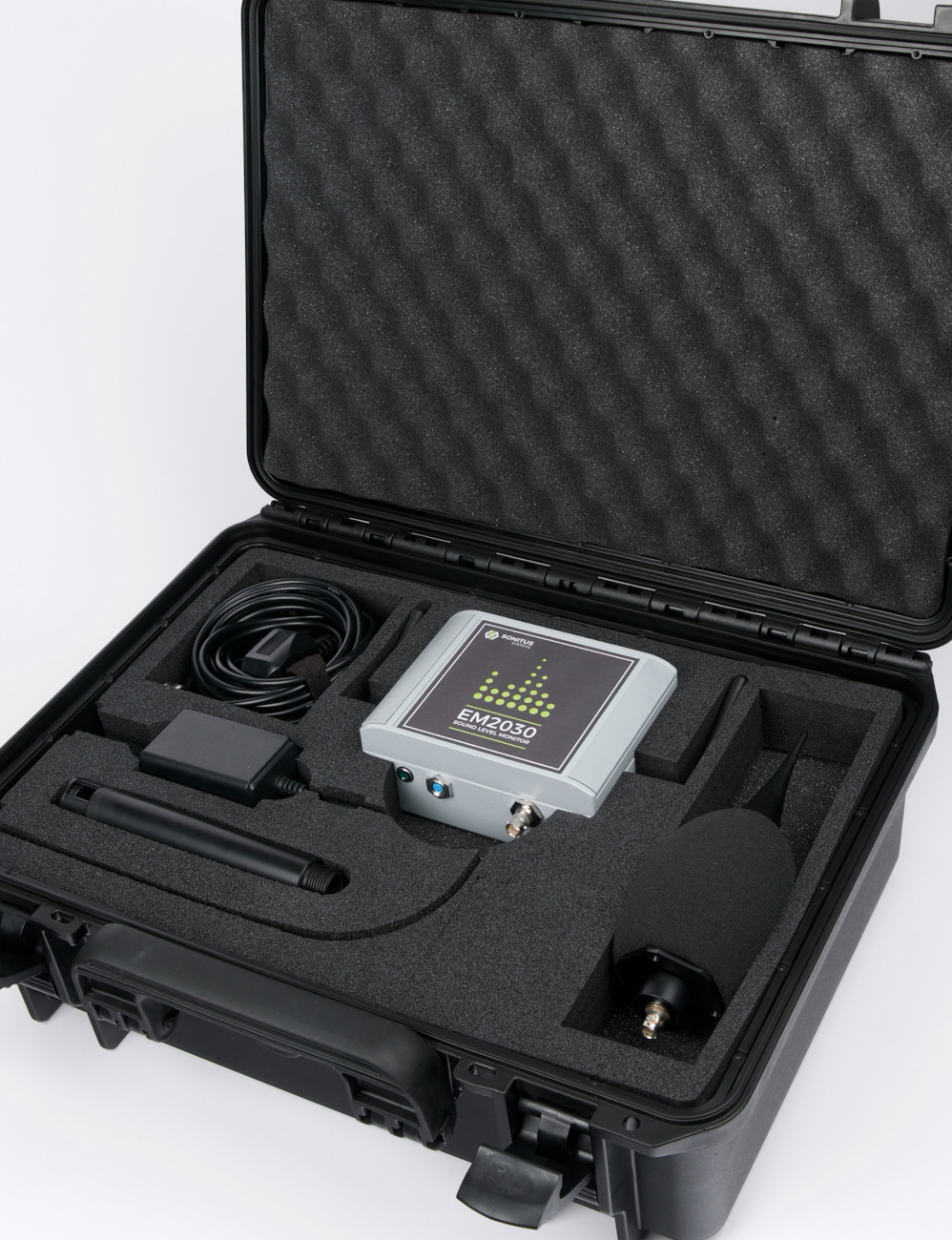
The Sonitus Systems EM2030 Environmental Monitor is included on the DEP Approved Devices list for this program – full specification here: https://www.sonitussystems.com/products/em2030-sound-level-monitor
The EM2030 is designed for continuous environmental monitoring on construction and infrastructure projects and supports regulatory monitoring requirements through:
- Continuous 24/7 noise monitoring
- Class-compliant measurement performance
- Automated remote data transmission for reporting
- Flexible power options, including solar deployment
- Rugged outdoor construction suitable for long-term site monitoring
Implementation timeline
The rule takes effect 120 days after publication in the City Record, providing time for project teams to prepare for compliance and integrate monitoring systems into project planning and ANMP applications.
Implications for construction projects
The monitoring requirement represents an extension of New York City’s existing construction noise regulations. By introducing continuous monitoring on large projects carrying out extended after-hours work near residential areas, the City aims to improve transparency and strengthen oversight of noise mitigation measures.
Contractors, environmental consultants and equipment distributors supporting projects in New York City should review the updated requirements and ensure that monitoring systems deployed on site meet the specified technical standards and appear on the DEP approved devices list.
Sonitus Systems offers both the hardware and software for a range of environmental parameters on a continual basis, with real-time information available through our Sonitus Cloud dashboard. For more details on our indoor and outdoor noise and air quality monitoring products and services, please contact the team at https://www.sonitussystems.com/contact-us